US tightens AI chip exports to data centres in SEA and Brazil
- Details
- Category: Regulation
- 4120 views
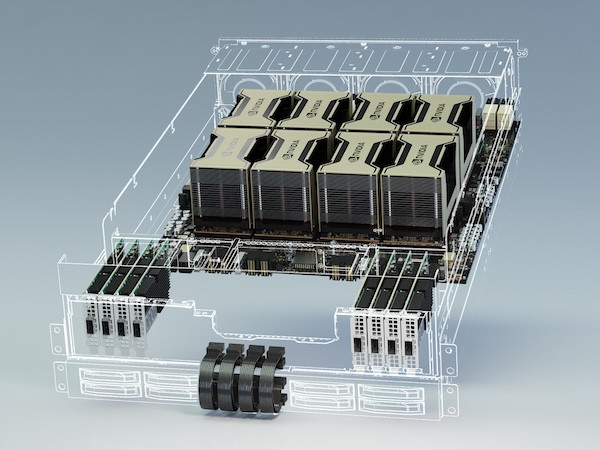
The Trump administration has issued a new export rule meant to prevent Chinese companies from accessing US-made advanced AI chips in data centres in Brazil, Indonesia, Malaysia, Singapore and Thailand.
According to a statement from the US Commerce Department’s Bureau of Industry & Security (BIS) on Monday, the new interim final rule (IFR) is designed to ensure that existing restrictions on access to US-made AI chips “cannot be circumvented through remote computing arrangements involving data centres in third countries” that are subject to US export restrictions.
The IFR said the new restrictions will apply for exports, reexports, or in-country transfers to overseas data centres that remotely supply significant volumes of compute to companies headquartered in Brazil, Indonesia, Malaysia, Singapore and Thailand.
BIS said the aim of the IFR is to undermine the ability of companies headquartered in “countries of concern” from using US-made AI chips to train advanced AI models.
BIS also said the IFR doesn’t apply to US companies operating in those countries (provided certain reporting requirements are met), or to systems used by online retailers and social media companies, which it said don’t pose the same national security threat.
Overseas data centres covered under the IFR criteria must obtain US export licences within 90 days to continue operations, or else they will face future export restrictions.
The IFR also applies to Macau and all countries in the Commerce Department’s Country Group D:5, which doesn’t include Brazil, Indonesia, Malaysia, Singapore and Thailand.
Group D:5 countries include Afghanistan, Belarus, China (including Hong Kong), Democratic Republic of Congo, Côte d'Ivoire, Cuba, Eritrea, Fiji, Haiti, Iran, Iraq, Myanmar, North Korea, Lebanon, Liberia, Libya, Somalia, Sri Lanka, Sudan, Syria, Venezuela, Vietnam and Zimbabwe.
The new rule comes in the wake of Nvidia president and CEO Jensen Huang’s resignation last week after acknowledging he had an extramarital affair with Alice Huang, a former director at Singapore-based cloud company Megaspeed, who has been accused by the US government of spying for Beijing. Megaspeed – an Nvidia partner – is now under investigation by the US government for allegedly exploiting a loophole in US export restrictions to smuggle Nvidia chips to China.
That said, the Trump administration has been suspicious for some time that Chinese companies were accessing advanced Nvidia chips via Thailand and Malaysia, where Nvidia has signed several deals with local telecoms and cloud service providers.
The new IFR also officially rescinds the “AI diffusion rule” that was initiated under President Joe Biden at the end of 2024 to restrict AI chip exports to countries suspected by the US government of serving as intermediaries to smuggle the chips to China.
The Commerce Department announced in May 2025 it would rescind and replace the AI diffusion rule, which it said was too sweeping in scope. While the rule remained in place until Monday, it has not been enforced under the current Trump administration.

More Articles you may be Interested in...







AWS launches new South America Region in Chile






Data centre R&D initiatives on the way to Brazil