Angani joins LINX Nairobi for regional peering in Kenya
- Details
- Category: Data Centres & Networks
- 644 views

East African cloud services provider Angani has joined the London Internet Exchange (LINX)’s Nairobi interconnection hub for regional peering in Kenya.
Angani connected to LINX Mombasa in 2025, with a strategic eye on joining the Nairobi exchange this year. The move will boost Angani’s peering across key locations and help it to deliver low-latency, reliable services for its customers.
East Africa is seeing a steady increase in internet usage and cloud adoption, while demand for locally hosted content continues to rise. This makes efficient network routing strategies increasingly important for network operators, with Angani CTO Denson Ngumo noting: “Local peering is instrumental for us. 80% of our traffic is local and that is supported by us connecting to an IXP.”
“Having already seen the number of peers our Mombasa POP got access to, peering at LINX Nairobi was a no-brainer. Being part of the LINX ecosystem allows us to give our customers access to cloud services at the lowest latency possible, access to international CDNs and overall network resiliency.”
Member-owned internet exchange LINX launched its Nairobi exchange in 2023. It now hosts 55 members, including unique networks such as TikTok and Starlink, and is accessible from multiple data centre locations across the capital. LINX Mombasa launched in 2025, with its proximity to major international subsea cable systems making the exchange a strategic gateway and key hub for East Africa.
The two exchange points enable greater flexibility, resilience and control over data for network providers within Kenya and the East Africa region. In the past year, the combined traffic across the two IXPs has increased twenty-fold to a peak of over 330Gbps.
Patrick Mbogo, Business Executive for Africa at LINX commented: “A 10GE port and 4Gbps of service at each global LINX location is included in the membership fee to really encourage regional peering to keep traffic as close to the end user as possible.”
More Articles you may be Interested in...

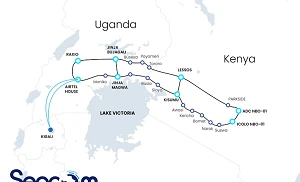
Seacom launches new terrestrial route in East Africa

NTT Data expands Salesforce offering in Kenya

Nigeria misses target for domain name adoption


Google to partner Kenyan Tourism ministry


PLDT’s Vitro establishes direct IX peering with BBIX

Will Kenya tax mobile money transactions?