GSMA receives funding for Pacific Island mobile weather alert systems
- Details
- Category: Humanitarian Comms
- 353 views
Mobile industry organisation the GSMA says it has secured a US$1.2 million subaward from the United States National Oceanic and Atmospheric Administration (NOAA) to strengthen mobile-enabled early warning systems across nine Pacific Island countries.
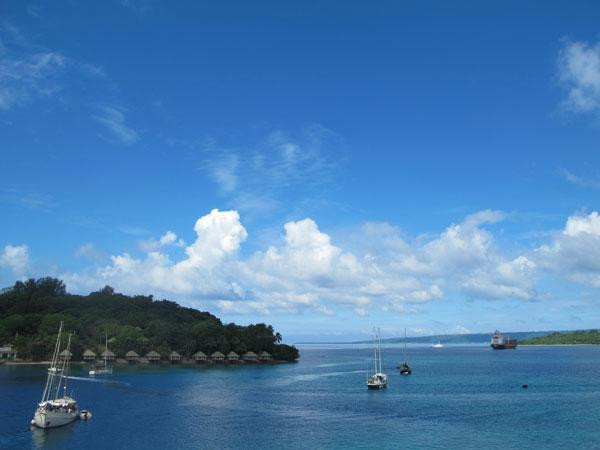
The funding will support the rollout of cell broadcast technology in the Cook Islands, Fiji, Kiribati, Nauru, Niue, Samoa, Solomon Islands, Tuvalu and Vanuatu (pictured).
The Pacific is among the regions most exposed to cyclones, coastal flooding and other natural hazards, making warning delivery a central issue for governments and communications providers. The funding is intended to help turn cell broadcast from a technical option into an operational public warning channel in the nine island states.
The NOAA funding is clearly in line with its aims, which it says are to understand and predict changes in climate, weather, ocean and coasts, to share that knowledge and information with others, and to conserve and manage coastal and marine ecosystems and resources.
Cell broadcast allows authorised agencies to send emergency alerts simultaneously to compatible mobile phones within a defined area. Alerts can reach large numbers of people within seconds, without being delayed by the congestion that can affect calls and text messages during emergencies.
Through its Mobile for Humanitarian Innovation programme, the GSMA will work with mobile network operators, national disaster management authorities, regulators and other local partners to support the delivery of these services. The work will address both technical readiness and the procedures needed to issue warnings, helping countries establish clear responsibilities for authorising and sending alerts.
The GSMA says it advocates integrating mobile alerts into national early warning systems alongside radio, television and community-based channels, helping warnings reach people with different connectivity and communication needs. Effective systems depend on clear policies, coordination between public authorities and mobile operators, and messages that communities can understand and act on.
The GSMA will lead cell broadcast activities under the Pacific Multi-Hazard Early Warning Systems Communication & Tools Project, working in close coordination with the University Corporation for Atmospheric Research (UCAR), a consortium of more than 129 North American colleges and universities focused on research and training in Earth system science, through its Cooperative Programme for Operational Meteorology, Education and Training (COMET).
The Weather Ready Pacific Programme (WRP), whose aim is to reduce the human and economic cost of severe weather events across the Pacific, has played a strong role in providing technical support and regional coordination for the implementation of these activities. The project supports wider regional efforts to strengthen hazard monitoring, forecasting and warning communications.
The funding builds on the GSMA’s work which began in 2025 with the Pacific Islands Telecommunications Association (PITA), a non-profit organisation formed to represent the interests of Pacific Islands in the field of telecommunications, and network solutions group Omnitouch Network Services to bring together mobile operators, meteorological services, regulators, UN agencies and governments to advance mobile early warning systems across the Pacific.
It also supports the GSMA’s wider contribution to the Early Warnings for All initiative, through which its Mobile for Humanitarian Innovation programme and regional teams are working with partners to strengthen mobile-enabled warnings across multiple regions.

More Articles you may be Interested in...








PDG sells Indonesian enterprise data centre business


HBL and RAD to support comms for Indian Railways


Apple Pay finally arrives in India

Battery deal targets telecom infrastructure in India


TRAI launches platform to rate digital connectivity